Navigating Environmental Compliance: How to Handle a CGWA Show-Cause Notice Proactively
In the industrial manufacturing sector, water is often the lifeblood of daily operations. However, with rising environmental concerns and stricter regulatory frameworks, how your facility sources its water can quickly become a legal and operational flashpoint.
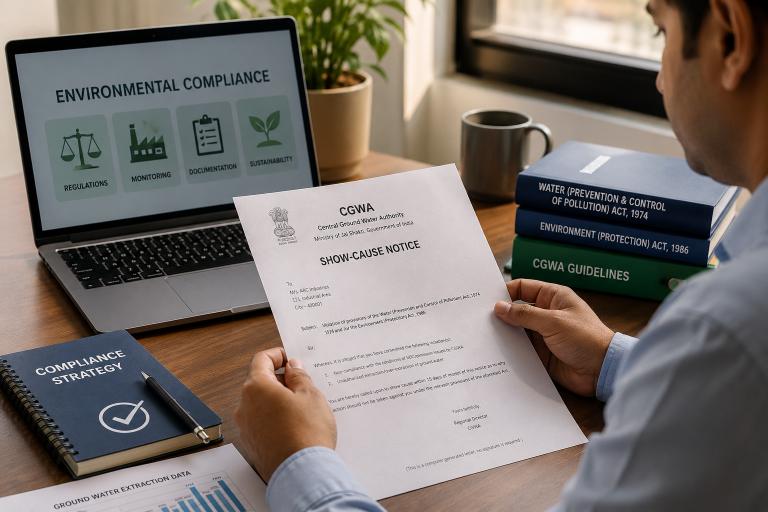
A prime example of this recently unfolded when the Central Ground Water Authority (CGWA), Ahmedabad, served a show-cause notice to a manufacturing unit based in the ceramic hub of Morbi, Gujarat. These industries are large in number. The notice alleged unauthorized extraction of groundwater without a valid No Objection Certificate (NOC) and demanded justification to avoid punitive actions.
For any business, receiving a notice from a regulatory body can be daunting. However, the Lemon Tiles LLP’s structured, evidence-backed response offers an excellent blueprint for how industries can navigate compliance challenges transparently and effectively.
The Core Elements of a Robust Compliance Response
When a regulatory authority issues a show-cause notice, panic is the worst response. The best approach is a factual, documented defense. Here is how Lemon Tiles LLP addressed the CGWA's concerns step-by-step:
1. Factual Verification of Infrastructure
The notice alleged illegal groundwater extraction. The company’s first and most crucial line of defense was straightforward: there is no borewell on the premises. By clearly stating that they have never drilled for groundwater, they immediately addressed the root of the allegation.
2. Operational Justification (The "Why")
To make a defense believable, it helps to explain why the alleged activity wouldn't make sense for your business. In this case, groundwater in the area is of a quality that is entirely unsuitable for high-quality ceramic tile manufacturing processes. Pointing out this operational mismatch adds a layer of practical logic to the defense, which was further solidified by attaching an official supportive affidavit.
3. Proof of Alternative Sourcing
If an industrial plant isn't using groundwater, it still needs water to run. To prove they weren't secretly extracting water, Lemon Tiles LLP provided clear evidence of their actual water source: licensed water tankers. By attaching historic tanker bills since the factory's inception, they established a transparent paper trail of their water consumption.
4. Proactive Regulatory Alignment
The ultimate "checkmate" in resolving a compliance dispute is showing that your official state permits match your actual practices. To nullify the show-cause notice, the company secured a revised and modified Consolidated Consent and Authorization (CCA) from the state pollution control board. This updated authorization explicitly recognizes and permits the use of tanker water as the primary source for their industrial and operational applications.
Key Takeaways for Industrial Managers
The situation faced by Lemon Tiles LLP serves as a vital reminder for manufacturing units across India:
- Keep Your Paper Trail Pristine: From the day your factory opens, maintain immaculate records of utilities, vendor bills (like water tankers), and infrastructure layouts.
- Align All Permits: Ensure that your actual operational practices perfectly align with the text on your Consolidated Consent and Authorization (CCA) and other environmental permits. If your water source changes, your permits must change too.
- Respond with Respect and Evidence: When dealing with bodies like the CGWA, responses should be respectful, prompt, and heavily backed by legal affidavits and official documentation.
By presenting a bulletproof case—consisting of a modified CCA, historic tanker bills, and a formal affidavit—Lemon Tiles LLP has respectfully requested the revocation of the notice. Their proactive approach shows that environmental compliance doesn't have to be a roadblock; instead, it can be a showcase of a company's commitment to operating legally and responsibly.